
Representative scenario, not a customer story
Picture a UGC creator with a tabletop product, a required spoken disclosure and two approved opening lines. The brief asks for a clean version plus a captioned cut. Reaching toward the phone between attempts moves the prop, and the strongest delivery is on the take with the wrong opening.
Separate required wording from delivery choices
Mark the words that must remain exact: the approved product name, disclosure and any supplied line. Keep alternative hooks in separate scripts so the intended version is clear. For acting work, follow the casting instructions about eyeline, framing, slate and editing; this workflow does not override them.
For sponsored UGC, the FTC’s disclosure guide explains when a material connection should be stated. Its endorsement questions and answers also address free products and truthful experience. An approved script is still something the performer must be able to say honestly.
Can you control the recording without touching the phone?
Yes. Map a pedal or page turner, then test it with the product already in your hands. A keyboard-style remote or foot pedal can assign record, pause or script movement to a supported key. Start with Apple’s pairing instructions, then run Lightshot’s live button test. Remote help lists the recognized keys and their defaults.
Test every assigned action before setting the product in its final position. Hold stops the script while the camera keeps filming; record/pause stops that recording part. Confusing those actions can leave an unintended gesture in the take. No accessory model has completed physical-device testing, so do not buy a particular pedal on the assumption that it is verified here.
For a wider shot, a separate prompter iPhone can display the words while the other phone records. Its own microphone listens for voice-following, which matters when the performer stands farther from it.
Is an edited take acceptable for a self-tape?
Only when the casting instructions allow it; some ask for one uninterrupted performance. Use sentence redos and part deletion for a permitted scripted product edit. The retake guide explains exactly what each action removes. For an audition that asks for an uninterrupted take, record another full attempt instead of joining a corrected performance.
Lightshot lets you compare two takes of a script. Listen for the agreed emphasis and complete wording before choosing one. A relaxed delivery that omits the required disclosure is not ready to hand over.
Check sound before processing the deliverables
Apple’s recording input controls help select the intended microphone. Test a line while handling the prop; packaging noise can hide the word you need. NIU’s self-recording advice gives practical guidance on distance and lighting.
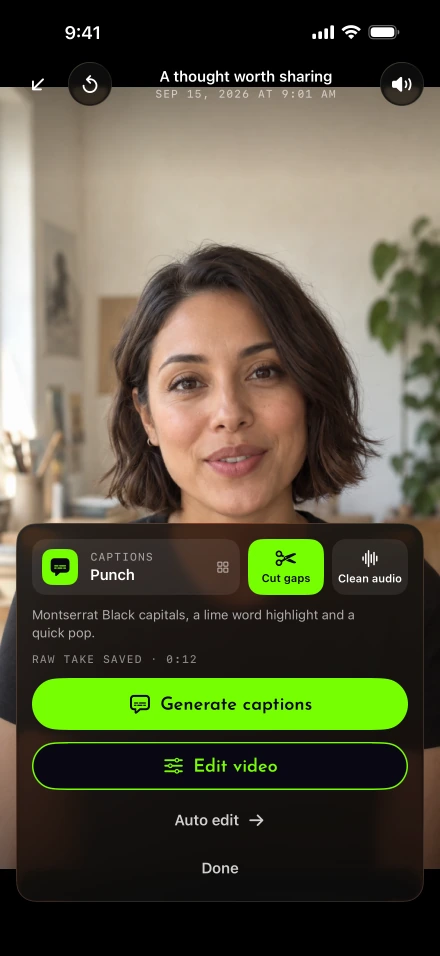
Choose No captions for a clean delivery where requested, and use caption controls for a separate requested version. In the editor, avoid music, looks or background changes that the recipient did not ask for. Music comes from your own files; Lightshot does not include a licensed track library.
Which video shapes should a UGC creator deliver?
The ones the brief asks for; one edit can be exported as 9:16, 4:5, 1:1 and 16:9 files. For the representative UGC brief, completion means the correct opening, a visible product and the required disclosure in each agreed version. Inspect each export shape for cropped hands and labels. Actor self-tapes should likewise be reviewed against their own submission instructions, which may require a different eyeline and an unedited performance.
Budget for a paid subscription with no trial before the session. Cancellation help follows Apple’s subscription controls; deleting the app does not cancel billing. Sources checked September 27, 2026. The audience directory covers other recording jobs when the brief changes.